First Gen and Focused: How to Set Intentional Goals for 2026


"A goal without a plan is just a wish." – Antoine de Saint-Exupéry
This Year, we approach personal goals with strategy
As a first-gen professional, 2026 is the year that our personal goals become part of our overall advancement plan. When we intentionally support our personal wellbeing, confidence, and energy, we strengthen every professional win and reduce the burnout that often comes with carrying so much on our shoulders. Personal success is not separate from professional growth. It is the foundation that makes lasting success possible.
Reflect Before You Reach: Honor the Journey You Just Took
Before you rush into new goals, we must pause to recognize where you’ve already been. Reflection helps you understand what you want more of, what you need less of, and what deserves to be left behind in 2025.
To reflect intentionally, question your 2025 actions, reactions, successes, and failures. Be honest with yourself and try to identify specific scenarios, both good and bad. Remember that even the reactions or situations that seem negative in the moment can be a growth opportunity through reflection. Try to notice the patterns beneath your decisions, habits, and growth.
Reflection Prompts
What did I accomplish this year that I’m genuinely proud of?
Where did I stretch myself the most?
What drained my energy, and what fueled it?
What challenges taught me something important?
What support did I wish I had more of?
If I repeated the pace and patterns of 2025 for the next five years, would I end up where I want to be?
If the answer is no, that’s a sign something needs to shift.
Action Item
Set a 30-minute “2025 Debrief” session this week. Journal your answers without editing then go back and notice and themes or repetition. Use those findings to guide the rest of your goal planning.

Redefine Success on Your Terms
As a first-gen professional (or young professional generally), you may have inherited expectations: be stable, be responsible, don’t take risks. Reconciling those expectations with your personal goals should not feel impossible. But first you must understand your personal motivations and unique goals for 2026. Step back and ask, “What do I want?” or “How are my goals different than those in my immediate environment?”
One great question to understand themes for 2026 could be “What is my ideal self and how do I reach that person?” Dig further with questions like, “ How do they carry themselves? What do they do in their free time? What do they read? How do they introduce themselves to others?/what is other’s first impression of them? How do they show up in their community?” Honesty is key here to determine how you can elevate your inherent values, natural personality, and most authentic presentation of self.
A cautionary note about comparison: If you are emulating celebrities or online personalities as inspiration, make sure to be specific as to the elements of such celebrity you would like to see in yourself. Pull specific quotes they’ve said or projects/volunteerism/fashion looks you admire, so you can best apply to yourself. Remember that “comparison (to anyone) is the thief of joy” so be true to yourself, while being inspired by others.
Your educational system may offer goal setting workshops to help inform your planning mindset. Your professional job may even require 2026 career goals for your role (although, be sure to keep the personal goals to yourself). There are a variety of goal setting techniques you can use to brainstorm: vision boarding, journal prompts from Pinterest, an Instagram or TikTok folder, or even a simple Notes app for jotting down the ideal version of yourself.
And of course, if you did not complete all your 2025 goals, simply add then to your list for 2026. No pressure to finish everything by the end of the year; this aspect of life can move at the pace of your choosing, without feeling rushed.
Thought Starters
Which of my current goals feel aligned, and which feel like obligations?
What would success look like if no one else’s expectations were involved?
What lifestyle do I want, and what decisions support that lifestyle?
The Values Check
Every time you set a new goal, ask yourself:
“Is this rooted in my values, or in someone else’s expectations?”
If it’s the latter, release or redefine it.
Action Item
Write down your top 5 values (e.g., growth, family, creativity, rest, community). Use this list to filter every goal you set in 2026.
———
Find Your Next Gen Three Goals for 2026
Over time, and as you accomplish smaller goals, you will gain momentum and figure out what techniques work for you. As you move through this process, you may find that choosing three to 5 larger goals helps you see the big picture of growth, and breaking down these goals into small action items helps you achieve at a reasonable pace. Remember, goal setting is about learning more about yourself and who you want to be; the journey to accomplish them (the decisions, the deviations away from our current limiting beliefs, or intentional reflection) is the entire point.
To avoid burnout and overwhelm, you will want to focus on the most important goals for 2026. Common yearlong goals could include starting a new workout habit, learning a new language or hobby, or another goal that perhaps requires a financial investment you will save for over time. By focusing on the best version of your future self using the thoughtstarters above, you will be able to determine which goals will require the most time or habitshifting. Let’s call this the Next Gen Three, in which you choose your three most important goals for 2026. This framework helps young professionals, especially first generation professional, choose balanced, meaningful goals that support long-term growth.
more Questions for Choosing Your Next Gen Three
What skills or habits would make my work life easier or more fulfilling?
What financial changes would make me feel more secure and empowered?
What do I need more of in my life — rest, joy, structure, creativity, connection?
Build Accountability Systems
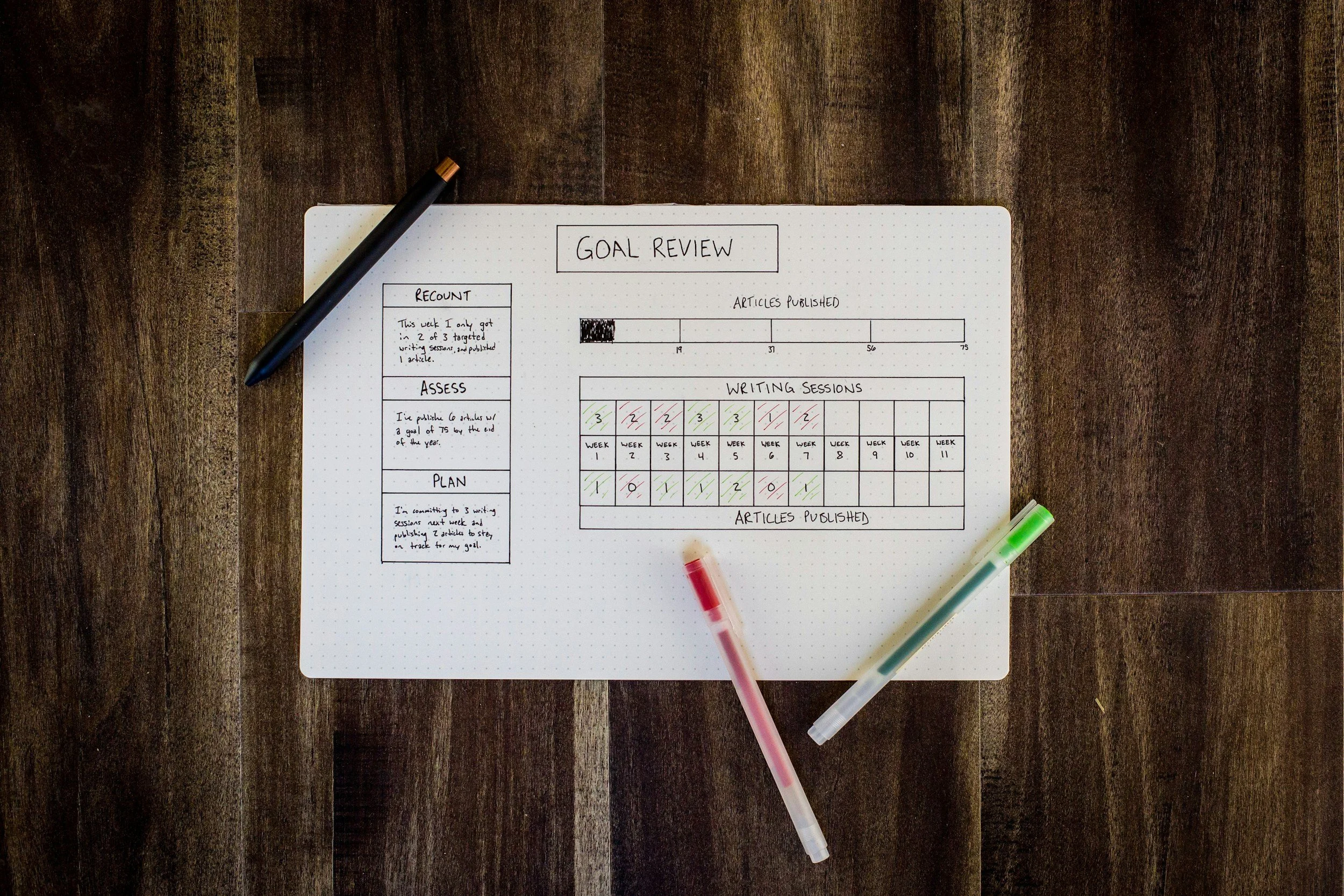
Consistency is built within your systems that work for your life as it is right now, including your current time availability, schedule, priorities, and motivation. As a young professional juggling multiple responsibilities, you need accountability structures that actually support your lifestyle, not rigid routines that do not feel natural or sustainable.
Your accountability system should include people, tools, and rituals that help you stay on track without burning out. Start with people who genuinely want to see you grow: a mentor, a peer, or an “accountability buddy”. For example, if you goal is to start a workout habit, find a workout class (your local recreation department, or school athletics office, may offer classes at low or no cost) of likeminded people that motivate you. If you are trying to start new habits (e.g. drinking more water, getting in a certain amount of exercise), add tools that help you track progress visually and stay organized, such as habit tracking in a journal or a Notes App. Even writing down your daily goals after you’ve achieved them just to check the box can feel satisfying to your sense of accomplishment. Then anchor everything with rituals that help you recalibrate when life gets busy, such as meditation or gratitude. Over time, these sytems may evolve as you figure out what works for you; this is an important step to building sustainable accountability that works for you, not against you.
Ways to Stay Accountable
Partner with a goal buddy and share progress monthly (including attending an FGPM event with friends!)
Check out your local recreation center for crafting classes, workout classes, skillsbuilding, and more fun ways to learn new things
Use digital tools like Notion, Trello, or Habitica for tracking. Visualizing your progress (or areas of opportunity for improvement) can be helpful to staying on track.
Schedule monthly “personal check-ins” with yourself to review what’s working and what needs to shift
Shift your schedule to accommodate your energy levels: for example, if you have more energy in the mornings, consider doing your workouts then.
Use your favorite water bottle to motivate you to hydrate regularly. Decorate it with tracking stickers for easy daily visualization.
As you achieve your small goals, be sure to keep the larger picture in perspective. Every goal counts.
reflections to Maintain Progress
Where am I seeing progress — even if it’s small?
What barriers came up this month, and how can I adjust my system to support me better?
What habits or routines made my life easier this month?
Did this adjustment work? For example, was I actually able to wake up early for the gym or was did I have more energy in the evening?
Action Item
Block the first Sunday of each month as your “2026 Check-In Day.” Treat it as nonnegotiable, like an appointment with yourself.
If a goal no longer aligns with your values, or picture of your best self, it is OKAY to switch it, or redefine it.
Similarly to switching goals, if you find that, over time, you are developing your desired habits into a sustainable routine, challenge yourself further or consider the goal achieved. There is no need to continue with a goal that you can honestly say you have completed.
Celebrate Small Wins Loudly
Young professionals, especially first generation professionals, often minimize their achievements. We may be accustomed to constantly staying productive or prioritizing the achievement, not the process. But celebrating small wins builds momentum, confidence, and happiness, which are all essential elements of sustainable success.
When you celebrate intentionally, you reinforce the belief that you are someone who follows through. You also give yourself a chance to savor your growth, instead of operating in constant survival mode. If you feel comfortable, involve others in sharing your success and invite them to share their wins as well. Make it into an event: host a one-hour Zoom call where you share your wins from that month or quarter, or practice gratitude together.
Without overconsuming and while being conscious of the environment, when you complete successful habit building or achieve a goal, treat yourself to something that will help you maintain that process into the future. For example, if your goal was to drink more water, reward yourself for 30 days of hitting your goal volume with a larger water bottle (or smaller or more stylish, whatever meets your needs). If your goal was to be more organized, and you created a successful organizational system that works for your lifestyle, reward yourself with a new tracking notebook or bullet journal. If you are not necessarily motivated by “stuff,” a little consumable treat works just as well as long as it feels like a reward: a fun soda, the fancy chocolate you usually have no other reason to purchase, or just an extra day of rest (or PTO!).
Thought Starters
What small wins did I overlook this month?
What progress have I made that my past self would be proud of?
Action Item
Start a Wins Journal and document one win per week. At the end of 2026, you’ll have a year-long record of progress to look back on.
Own Your 2026 Story
The purpose of intentional goal setting is about creating a life that reflects your best self, starting with how you show up for yourself today. As a young professional, you’ve already overcome so much to reach this stage. Now it’s time to move into a year guided by intention, alignment, and self-trust.
If you’d like, use the Comments below to set a goal for 2026. FGPM is cheering for you loudly, consistently, and all year long!
More Posts You May Like



From humble beginnings, Keven Bell learned how to embrace change and find the value in every opportunity. His story of grit, resourcefulness, and tackling each new experience one step at a time give us the playbook for how an underdog can thrive, in every stage of life. His valuable advice, humble attitude, and relatable story resonates not only with first generation professionals, but anyone who has forged their own path.
In this inspirational Community Leader Interview, Keven shares the trials, tribulations, and and lessons of his first generation journey, reminding us that the first generation perspective is unique, valuable, and important.